Academy Spotlight: Ari Barack Fisher
Q&A with Academy Coordinator & Orchestra Manager Ari Barack Fisher
March 19th, 2026
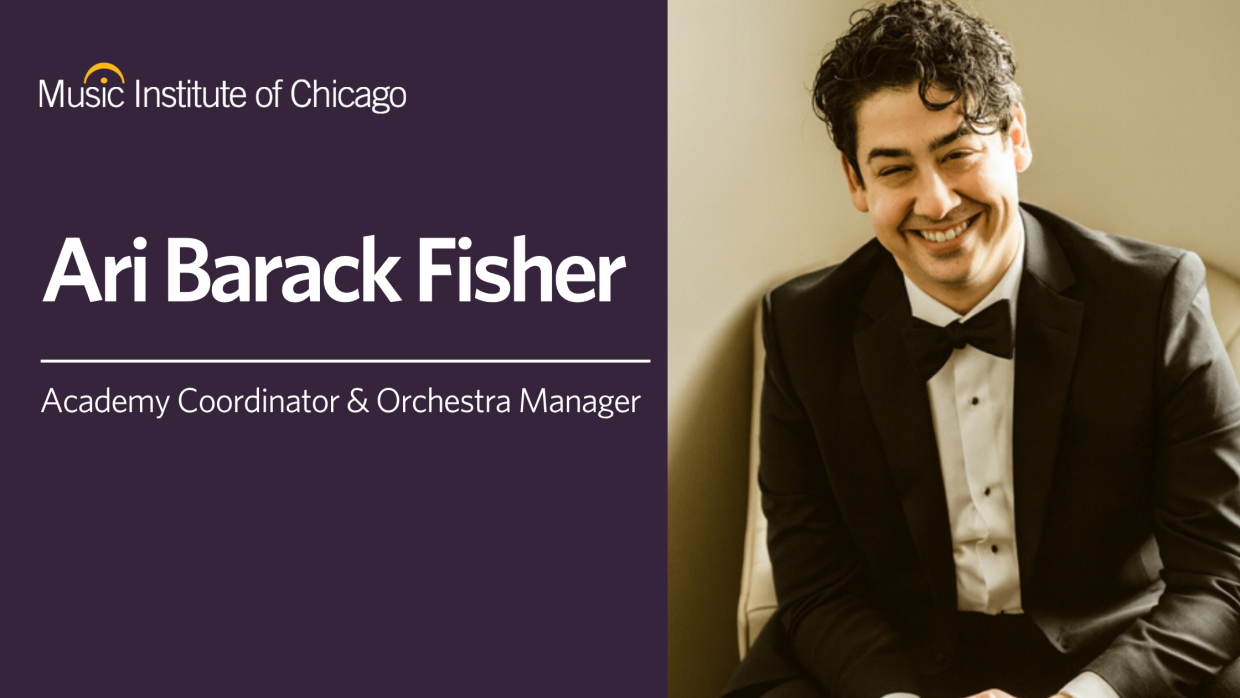
Meet Ari Barack Fisher: composer, violinist, and Academy Coordinator and Orchestra Manager at the Music Institute of Chicago. For Ari, things have come full circle. He started his own violin studies at MIC in 1996, and today he is back in the community supporting the next generation of students.
We talked with Ari about his busy life as a working composer and what it means to support students in the same place where his own musical journey began.
What drew you to your roles at the Academy?
Ari: I’ve always enjoyed working with young musicians and supporting them as they develop their artistic voices. When the opportunity to work with The Academy came up, Brigitte Gray encouraged me to apply and felt the role would be a great fit.
Being surrounded by such talented and dedicated students made it an easy decision. It felt like a wonderful opportunity to contribute to a community that cares so deeply about music and mentorship.
What is it about the MIC community that keeps you invested?
Ari: MIC was actually the beginning of my own path as a musician. I started my violin studies at the Winnetka campus in 1996. The nurturing atmosphere that surrounded me then is still present today, especially within The Academy.
Coming back now and supporting the next generation of young musicians in the same community that shaped me feels very meaningful.
Working with the Academy students, what do you find most rewarding about supporting young musicians at that stage of their development?
Ari: These students are truly exceptional musicians. Their dedication to perfecting their craft and their eagerness to learn are inspiring.
As a composer, I’m sometimes able to offer a different perspective when it comes to interpreting music. Thinking about how and why a piece was written can help students better understand the intentions behind the music they’re performing. At such an important stage in their development, those insights can shape how they approach music throughout their careers.
Outside of your work here, you’re an active composer with pieces performed all over the world. How did composition become such a significant part of your life?
Ari: I’ve always been fascinated by music from video games and films, especially franchises like The Legend of Zelda, Star Wars, and Indiana Jones. Hearing that music when I was young made me curious about what it would be like to create something that exciting myself.
So I started trying to write music as a kid. I was often caught scribbling musical ideas on my school papers during other classes.
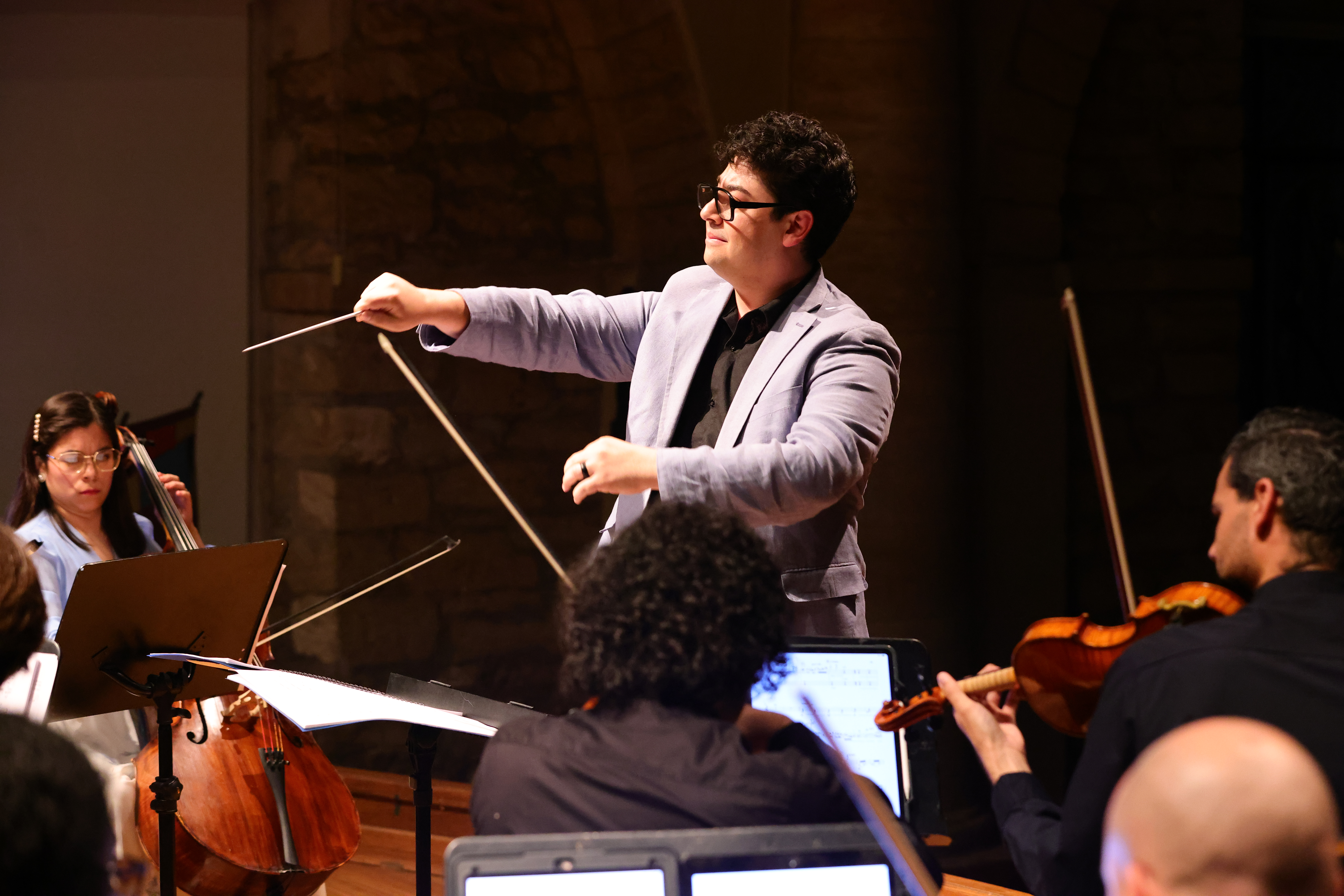
That interest eventually led me to study composition at the Indiana University Jacobs School of Music, where I earned both my Bachelor’s and Master’s degrees in Music Composition. Since then I’ve had the opportunity to write music for concert halls, commercials, films, and video games, with performances around the world, as well as releasing several full-length studio albums.
Over time my work has also grown to include larger concert works that explore cultural and historical themes.
Is there a single performance or moment in your compositional life that has stayed with you?
Ari: It’s hard to choose just one.
One memorable moment was standing backstage at the iconic Red Rocks Amphitheatre in Colorado and hearing over 9,000 people singing along to my string quartet arrangements of electronic dance music. It was surreal to hear 9,000 people all at once connect with something I had written.
Another meaningful experience was arranging Pablo Casals’ Hymn to the United Nations for the UN’s 80th anniversary celebration. Being able to contribute to music connected with such an important international institution was very special.
I also had the opportunity to compose Sound Off the Carillon, the official fight song for the Indiana University Jacobs School of Music. It was a fun way to contribute to a place that played such an important role in my development as a composer.
But one of the most personally meaningful moments was meeting violinist Jinty McTavish at Indiana University. She performed the first piece I ever wrote there, and we’ve remained close friends ever since.
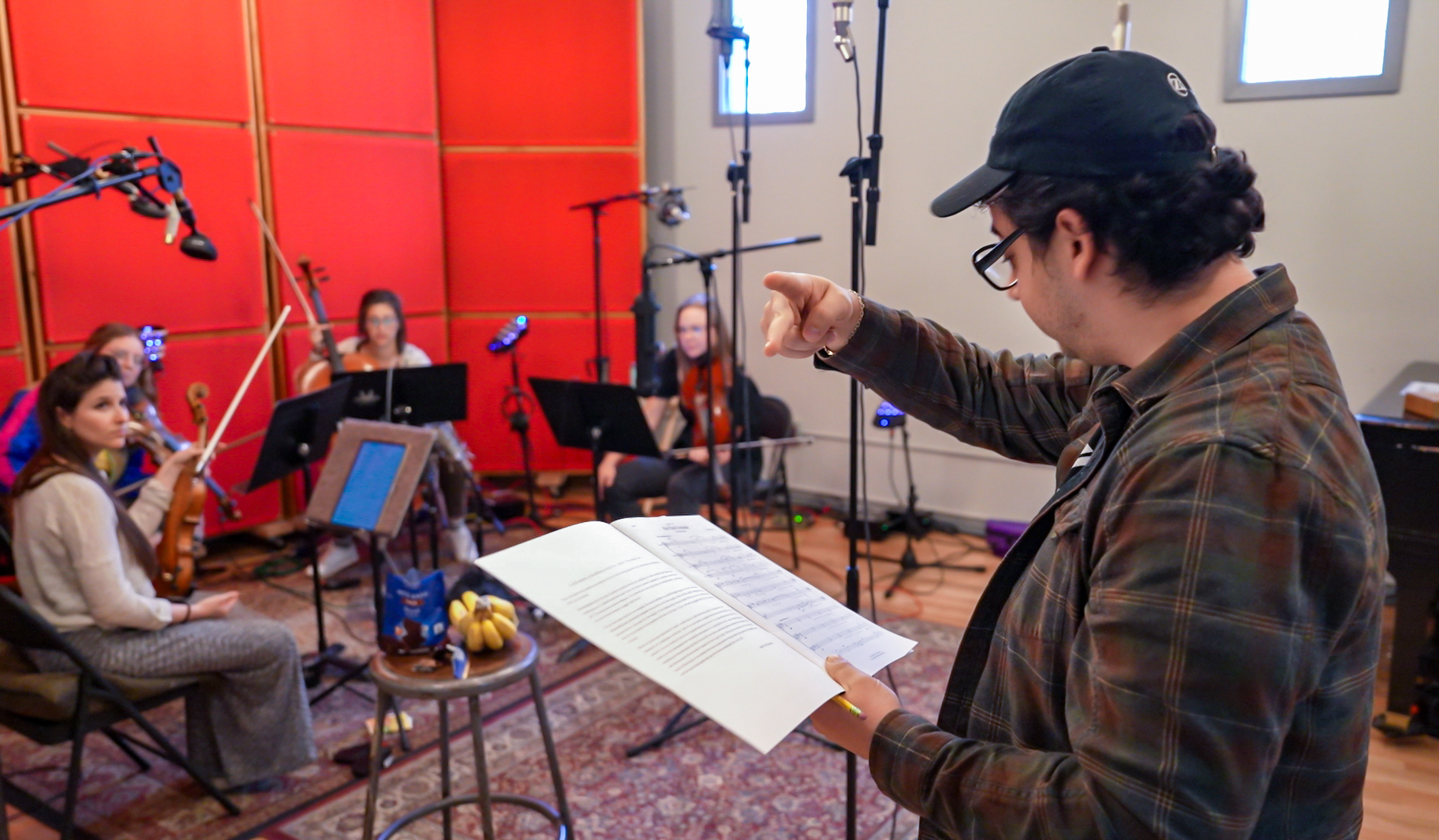
That friendship eventually led to many collaborations, and today I serve as the in-house composer for her remarkable string quartet, ATLYS. The music I’ve written for them has been performed across the country and has received several awards.
What has the life of a working composer taught you that you didn’t expect?
Ari: Versatility is essential. Every style of music has value.
A mentor once told me, “If a client asks for a certain style of music and you can’t write it, the job goes to someone else.” That advice stayed with me. Being open-minded and adaptable has been one of the most important lessons in building a career as a composer.
Do you find that your life as a composer informs your work here at MIC, or vice versa?
Ari: Absolutely. Being a composer gives me a different perspective when students are interpreting music, because I’m always thinking about how and why a piece is constructed. Sometimes that insight can help students better understand the intentions behind what they’re performing.
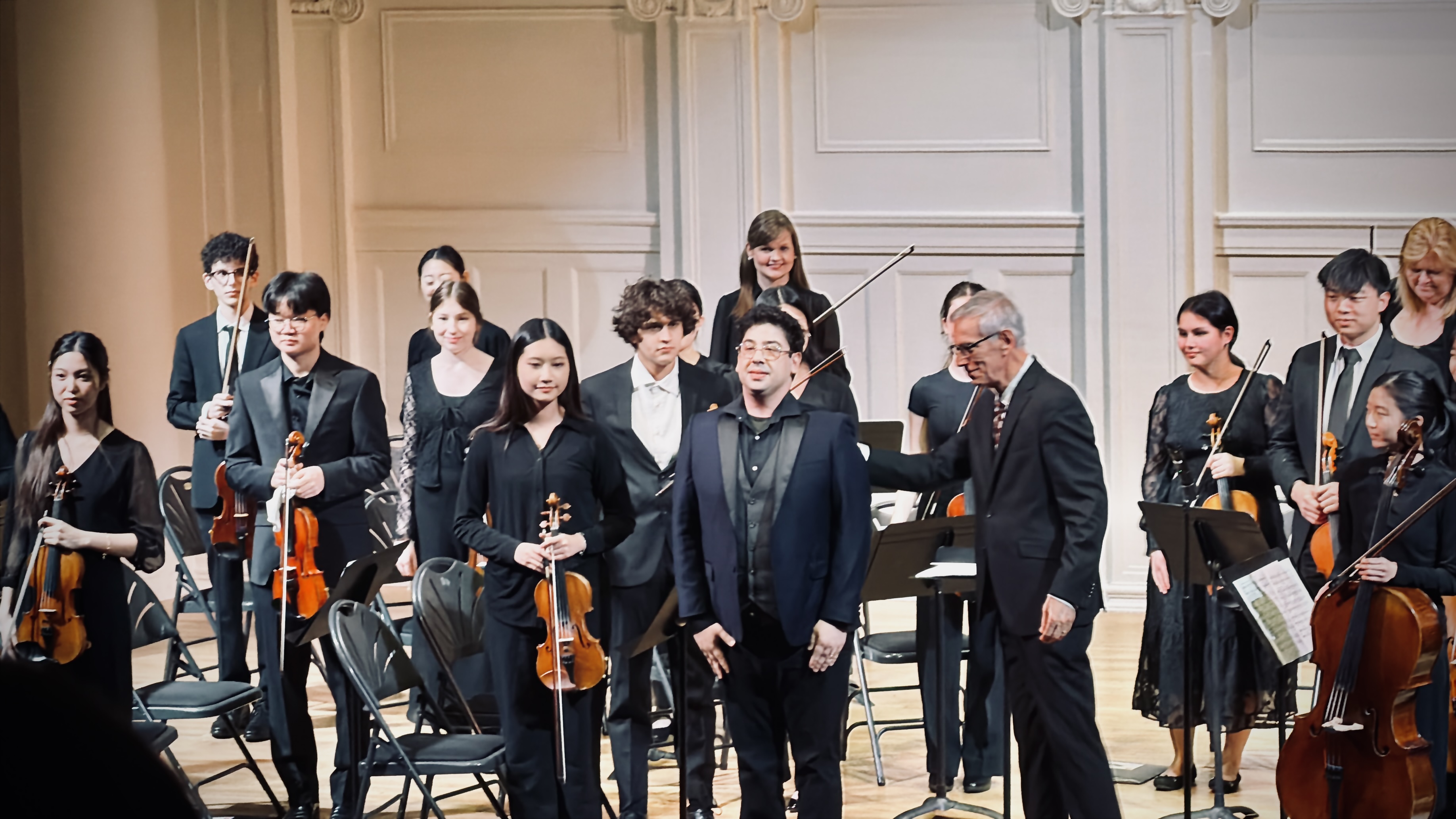
At the same time, MIC has created opportunities for my composing to intersect with the students’ musical experiences. I had the opportunity to create an orchestral accompaniment for the Moszkowski Suite for Two Violins, which allowed two of our senior students to perform the work with orchestra. The Academy orchestra has also performed my orchestral arrangement of the Korean folk song Springtime in My Hometown, which was a special experience to hear brought to life by the students.
Experiences like that make the connection between my work as a composer and my role here feel especially meaningful.
What does a day in your life look like balancing your work here with your life as a composer?
Ari: It’s honestly a great balance. On Saturdays I arrive early to open the Lake Forest building at 7:45 a.m., turn on the lights, and set out the student sign-in sheet. I check the weekly Academy email that Sue Polutnik prepares and post any expected absences on the bulletin board.
During the day I might be printing or binding parts for orchestra or chamber music. Sometimes student groups ask me to listen to their rehearsals and offer feedback. While the students are at lunch, I set up chairs and stands for orchestra rehearsal. In between those responsibilities, I often have time to work on my own composing, respond to emails, and prepare for the following week.
What does it mean to you to be a working composer while also supporting students who are on a similar or adjacent path?
Ari: I hope it shows students that building a life in music is possible. It’s certainly a competitive field, but with dedication and persistence there are many paths within the musical world.
If seeing someone actively working in the field gives students confidence as they pursue their own goals, that’s incredibly meaningful to me.
What are you most excited about right now in your work at MIC, in your composing, or both?
Ari: Some of the Academy students are composers themselves. One of the string quartets even has two composers in the group, and they recently co-wrote a piece for their ensemble. I’ve had the chance to mentor them through that process, which has been incredibly rewarding.
On the composing side, I’m also very excited about a new string quartet titled Makhzorim: Jewish Cycles, commissioned by Neil McTavish for the ATLYS string quartet, an ensemble that has championed the work. It’s a multi-movement string quartet that explores the cyclical nature of the Jewish calendar and the emotional journey through the holidays each year—moving through reflection, joy, memory, and renewal.
One of the Academy chamber ensembles will also be learning a movement from the work, which makes the project feel even more connected to my role here. Seeing students begin to explore their own creative voices makes that especially exciting, because it reminds me of the path that first led me to composition.
Whether he is guiding an Academy student through their first original piece, or writing music performed on stages across the country, Ari gives back what music gave him. It is the kind of mentorship the Academy is grateful to have.
Want to hear what Ari has been working on? Explore his music:
Romance for Cello and Piano — feat. Warren Hagerty and Orli Shaham, from the Pacific Symphony album American Tapestry
YouTube · Spotify
The Sonnenberg Suite
Spotify · Apple Music · YouTube Music
OPUS — ATLYS x Seven Lions
Spotify
Fair Winds and Following Seas
Spotify · Apple Music
Concerning Clock Town
Spotify · Apple Music
Beakville Beginnings — from the video game Bread and Fred
Spotify · Apple Music · YouTube Music